Data Centers & Cloud
The buildout behind the AI bill
Hyperscaler capex, colocation supply, power, cooling and networking — where the money goes after the GPU order, and which companies book it.
2026-10-27


2026-10-26
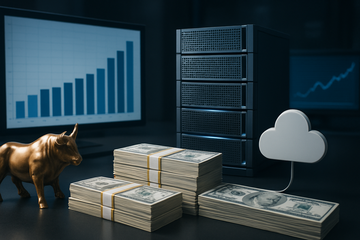
Microsoft's 60,000 Buyouts Cover Half the Depreciation Step-Up — and Just 2% of the Capex
Microsoft opened a voluntary exit offer on Oct. 26, 2026 covering about 60,000 of its 223,000 employees, but at the take-up rate the company itself disclosed for its April voluntary retirement program, the real number is roughly 18,000 to 24,000 departures worth about $4 billion a year. That is near 2% of the roughly $175 billion calendar-2026 capital plan, so labor is not funding the datacenters — it is funding their depreciation, covering roughly 40% to 70% of the annual step-up implied by a $175 billion asset base on 15-to-25-year lives. The signal for shareholders is that Microsoft is defending reported operating margin, guided down less than a point for fiscal 2027, by cutting its own cost base in the same breath it extends data-center asset lives — the combination Gartner says breaks down when $3.5 trillion of AI infrastructure faces impairment risk by 2030.
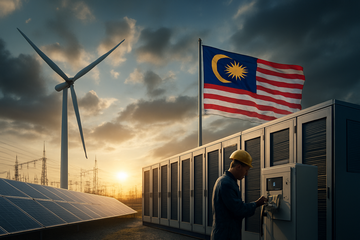
SoftBank's $50 Billion Malaysia Bet Lands on Turbines and Bonding Tools First — and It Bypasses the Credit Stress Now Choking US AI Capex
Malaysia's prime minister said on October 24, 2026 that SoftBank Group will put $50 billion into Malaysian AI, new technology and data centres — a number SoftBank Group has not confirmed in its own disclosures, and the only signed Malaysian document is an October 8 framework agreement with Grab and state oil-and-gas company PETROS that carries no megawatts and no schedule. Sized against the US cycle it is small: J.P. Morgan puts 2026 hyperscaler capex at $697 billion, and Goldman Sachs estimates roughly a third of AI capex is now debt-financed with new-issue concessions on large hyperscaler deals widening to about 20 basis points from 2-3. Malaysia's wave is funded by sovereign and strategic capital rather than that credit market, so it extends the equipment cycle rather than cannibalizing it. And because Malaysia's binding constraints are 9 GW of missing gas-fired capacity by 2032 plus export permits for advanced AI chips, the money lands first on power and cooling gear and on advanced packaging, not on accelerators.

Tower Semiconductor Jumped 9.9% on a Deal Signed Two Weeks Ago — and Still Trades 42% Below Its High
Tower Semiconductor rose 9.9% on October 26 with no new company disclosure, as the market re-marked a capacity contract signed on October 13 in which Semtech reserved dedicated silicon germanium capacity across Tower's American, Israeli and Japanese fabs for 800G, 1.6T and 3.2T AI links. The deeper story is that Tower has already sold 2027: $1.3 billion of contracted silicon photonics revenue and $290 million of customer prepayments, which is how a 200mm specialty foundry funds a 300mm photonics build-out. The tension is that the same shares trade at 72 times trailing earnings while trailing free cash flow depends on those prepayments, and management's 2028 model needs gross margin at 45% on 85% utilisation. Investors should treat the November 2 third-quarter report, not the October 26 pop, as the checkpoint that matters.

Verizon raised guidance a third straight quarter without raising capital spending — the AI backhaul bill is being paid by copper retirement
Verizon reported third-quarter 2026 net income of $5.3 billion, adjusted earnings of $1.31 a share and free cash flow of $7.8 billion, then lifted full-year guidance for a third consecutive quarter while holding 2026 capital spending at $16.0 billion to $16.5 billion — a range below every year since 2023. The funding comes out of the legacy network: AT&T is running copper service down to 1% of eligible customers, counting on $4 billion of annual savings by the end of 2028, and moving half of a new wholesale fiber platform to GIP and CPP Investments in a joint venture that closes in the first half of 2027. Meanwhile Verizon has ordered more than 80 million miles of fiber from Corning for 2027 through 2032 and sold Google more than $1 billion of dark fiber. The capital is rotating out of the carriers' build programs and into the fiber supply chain and contracted hyperscaler demand.
2026-10-25

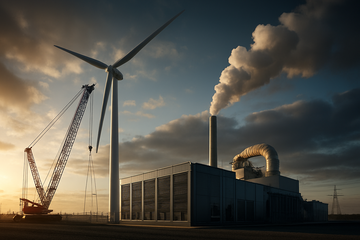
Audi's $4 Billion Georgia Plant Prices a Tariff, Not a Car — While Georgia's Grid Already Carries 17 Gigawatts of Data Centers
Volkswagen's Audi will build 200,000 premium SUVs a year at the Middle Georgia Megasite for about $4 billion, with full production in 2031, after 25% Section 232 duties cost the brand roughly €1.2 billion in 2025. The plant is a hedge priced against a policy variable, not a growth bet: VW Group's2025 operating profit roughly halved to €8.9 billion and first-half 2026 operating profit fell 12% on a 3.8% margin. The grid framing is the wrong worry — Southern Company already carries 17 GW of contracted large load and an $81 billion 2026-30 capital plan, while Georgia's dedicated large-load tariff means an industrial customer pays for its own grid build. The tradeable consequences sit in the tariff schedule, the rate base and the rail, not in the plant itself.
Bloom Energy grew revenue 138% and its stock fell 11%. The fuel cell bottleneck is cash, not orders
Rystad Energy, reported Oct 23, 2026, expects data-center fuel cell spending to reach about $30 billion by 2030 from roughly $2.8 billion in 2025, with a visible order book near 9 GW. Bloom Energy is the one vendor turning that demand into hardware — third-quarter 2026 revenue of $1,235.8 million, up 138.1%, at a 33.8% gross margin — but its own Form 10-Q shows why the stock dropped 11.24% the next day: operating cash flow of negative $27.1 million, contract assets up $617.5 million, and roughly69% of revenue in two customers. Speed-to-power is a real moat, but the fuel cell build is a working-capital machine, and margin only appears for the vendor that can manufacture at scale.
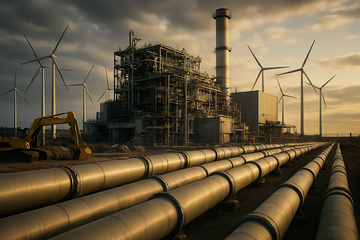
Venture Global's $17.2 Billion Bet Is a Slot Option: Only 8 of 15 Turbines Are Reserved
Venture Global's October 9 power and grid frame agreements with GE Vernova and Baker Hughes cover up to 16 gas-fired power islands and an aggregate ~$17.2 billion of equipment, but only eight of the fifteen remaining islands sit under a definitive manufacturing reservation. The economics are not a gas story: at 720 MW a block, the islands could burn up to 1.9 Bcf/d, which turns a fee-based, gas-price-neutral LNG exporter into the operator of a gas-cost-exposed merchant power book where one dollar per MMBtu of Henry Hub moves roughly $424 million of annual EBITDA. For investors this is a slot option — cheap to hold, expensive to exercise — and the test is whether data center customers sign power contracts before the mid-December 2026 grid reservation deadline.
2026-10-24
2026-10-23
Google's 1,070 MW Virtual Power Plant Turns PJM's $325 Capacity Cap Into an AI Capital Line
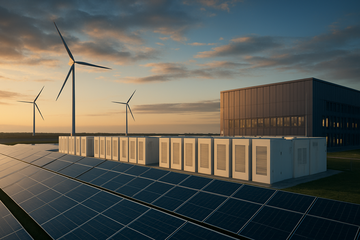
Google and power aggregator Voltus announced on October 22, 2026 an expansion of their PJM bring-your-own-capacity agreement adding 1,070 MW on top of the 100 MW tranche signed in June, with the contract running through 2040 — sixteen days after Constellation Energy agreed to supply Google 3,590 MW of new and existing nuclear power in the same market. PJM's July 2026 capacity auction cleared at the $325/MW-day cap and still came 6,831 MW short of reliability, so the demand-side leg is where hyperscaler power strategy now actually differentiates: Google buys the capacity obligation itself instead of waiting in an interconnection queue. For investors the read-through is that AI power cost is migrating off utility rate base onto hyperscaler balance sheets, with the money flowing to the aggregator and the device fleet — and with a performance risk that PJM's own 67% demand-response dispatch record quantifies.
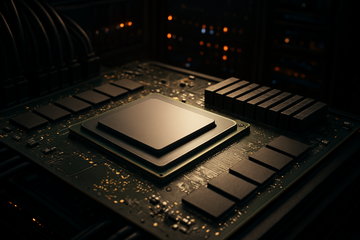
Google Unblocks PyTorch on TPUs with “TorchTPU” makes inference demand captive
Google’s new open-source “TorchTPU” removes the engineering friction that keeps many AI apps pinned to Nvidia-style GPU stacks, directly targeting the inference workload routing layer. Combined with Amazon’s “TorchNeuron,” hyperscalers are shifting the battleground from GPU pricing power to the app-to-accelerator funnel—where independent startups lose flexibility and hyperscaler silicon wins utilization.

Western Digital Beat Its Own Guidance and the Shares Fell Anyway: AI Storage Has Switched From Demand to Price
Western Digital's fiscal Q1 2027 report, released after the close on Oct 22, 2026, was the cleanest proof yet that the AI build-out converts into hard-disk margin: revenue of $4.38B (up 55%), a 58.1% non-GAAP gross margin, non-GAAP EPS of $4.64 against $4.08 expected, a 17% dividend increase, and a December-quarter guide of $5.1B versus roughly $4.57B of consensus. The shares still closed down 6.4% at $354.19 that session and fell further after hours. The arithmetic explains why: 248 exabytes shipped, up 22%, while blended price per terabyte rose 28%, so roughly 60% of the $1.56 billion revenue increase was price and mix rather than units. Investors no longer pay for storage demand; they pay for the durability of a price, and they are discounting it because memory inflation is capping cost-per-terabyte improvement while component suppliers announce new capacity.
2026-10-22

Nexans calls cable capacity the AI data-centre bottleneck—meaning the copper price trade is now an electrical-equipment order-book story
Nexans’ CFO says AI data-centre builds are increasingly gated by cable manufacturing capacity, not by upstream demand or even grid constraints. The key timing detail is long-lead XLPE (“CV”) production—about three years—which shifts investor attention toward how electrical-equipment and grid operators place and sequence orders, and how copper-linked material costs flow into those commitments.

SpaceX Grew AI Revenue Ninefold to $7.6 Billion and Spent $19.6 Billion Doing It — the Tesla Merger Committees Are a Financing Decision
SpaceX is now an AI infrastructure company with a launch business attached: Super Intelligence revenue of $7.56 billion in the quarter ended Sept. 30, 2026, up more than ninefold, exceeded what Starlink and space launch produced together, and the company posted its first operating profit as a public company at $2.79 billion. That profit came with $19.59 billion of capital expenditure — 84% of it inside the AI segment — and negative $9.96 billion of free cash flow, with fourth-quarter capital expenditure guided to $35–40 billion. Both boards have formed special committees of independent directors to study a Tesla combination, yet no merger agreement has been filed, the committees have not agreed on terms, and SpaceX's final IPO lock-up tranche expires on Dec. 8, 2026. Read the committees as a financing and governance decision for a GPU build-out that equity markets are unlikely to fund cheaply into that unlock, not as an industrial combination.
Trump's Data Center Power Mandate Has No Legal Teeth — the Money Still Flows to Turbines
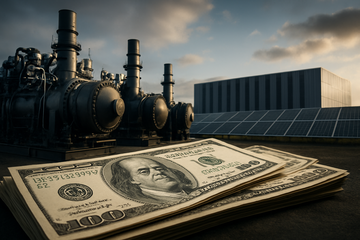
President Trump's Oct. 21 directive that new large data centers must make their own electricity and pay host communities a “dividend” arrived with no executive order, no dollar figure and no enforcing agency — and a week earlier FERC had ruled that federal regulators cannot reach retail rate design for large loads. What actually binds is being written in state capitals, where Virginia's commission has already forced Dominion Energy to bill data centers directly for the transmission that serves them. The investable consequence is a capital shift out of utility rate base and into equipment order books such as GE Vernova, whose gas backlog reached 116 GW in the second quarter, while the ratepayer shield compresses returns on the utilities that built for data centers in the first place.
2026-10-21
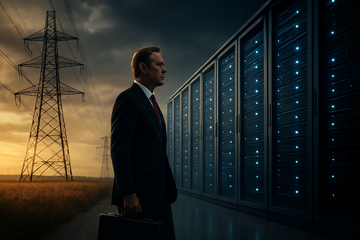
FERC Punted, Trump Pressed, Utilities Pushed: The AI Power Bill Now Has a Payer
Within 24 hours on Oct. 20, 2026, the Federal Energy Regulatory Commission said it was drafting rules to widen its authority over AI-driven load, President Trump told data center operators to pay host communities a 'dividend' and to make their own electricity, and the Edison Electric Institute published a study showing electric companies have already won ratepayer protection in more than 20 proceedings across 16 states. The answers differ in form but not direction: the data center pays for its own interconnection. That shifts grid construction off utility rate base and onto private balance sheets, which is why the beneficiaries are the contractors and equipment makers building the grid rather than the utilities whose rate cases have been stalled by the fight. It also means hyperscaler power costs become a company-level margin question instead of a political one.

AT&T Bought $23 Billion of Spectrum and Pledged Half Its Fiber to a Pension Fund: The AI Grid's New Financing Template
AT&T closed a $23 billion EchoStar spectrum purchase at the end of July 2026, lifting net debt from $126.4 billion to $149.8 billion in a single quarter and net leverage from 2.68x to 3.13x, and its own answer is to hand half of the fiber engine it just bought to a joint venture with Global Infrastructure Partners and CPP Investments. That is the template for financing the American AI grid: when the ten-year Treasury yields 5.11% and Brent sits near $109 a barrel, a telecom balance sheet cannot own both the spectrum and the fiber, so long-duration pension and infrastructure capital takes the asset while the carrier keeps the customer. For investors, the spread between contracted AI-grid cash flows and the long end — not headline AI capex — is what now sets the price of fiber, of contracted megawatts and of the vendors that build both.

Alphabet's London Cloud Outage Was a Generator Failure — and It Landed 99 Days After the UK Called It Critical Infrastructure
Google Cloud lost one London availability zone to a power event on 20 October 2026, and the backup generators failed to engage: mains power came back, yet the outage ran 7 hours 52 minutes, a follow-on incident took another 5 hours 16 minutes, and 38 services were listed as unavailable. Eight banks and fintechs, NHS England, the courts' video platform, Royal Mail, DPD and Rightmove were hit, and 99 days earlier the same provider had been designated a Critical Third Party to UK financial services. The earnings impact is noise — Google Cloud did $24.8bn of revenue in the June quarter — but the failure mode is not: the binding constraint on cloud reliability has moved to electrical redundancy, which redirects spending toward power and cooling vendors and makes single-provider concentration an explicit cost for the banks that were knocked out.
OpenAI on Google Cloud Is a Capacity Play, Not a Partnership: Google Takes 1.5–3% of a $50B Run Rate as Azure's Exclusivity Premium Disappears
On October 21, 2026, OpenAI put its frontier models and Codex on Google Cloud's Model Garden, sold through Google Cloud Marketplace, with enterprises able to draw existing Google Cloud spend commitments down against those purchases. The money is not in the model: Alphabet's cloud segment grew revenue 82% to $24.8 billion in the June quarter while free cash flow turned negative on $44.9 billion of quarterly capital spending, and 2026 capex guidance now sits at $195–205 billion. Google is renting out a TPU fleet it has already financed, and the published Marketplace schedule keeps 1.5% to 3% of every transaction — which turns Anthropic's disclosure that 47% of its 2025 revenue flowed through cloud marketplaces into the most important undisclosed number in AI distribution. Microsoft keeps first-launch rights and OpenAI's $250 billion Azure commitment through 2032, but the exclusivity premium that once justified both expired in April 2026, and OpenAI's own infrastructure plan has been reset to roughly $600 billion through 2030 rather than $1 trillion.

SAP's Cloud Backlog Grew 26% to €24.1 Billion: Enterprise AI Budgets Are Real, and They Land in Software, Not Labour
SAP's third-quarter statement, published Oct 21, 2026, put current cloud backlog at €24.144 billion, up 26% at constant currencies, and moved full-year cloud revenue guidance to the upper end of the €25.8–26.2 billion range — the first signed order book for enterprise AI spending this cycle. The budget is buying subscriptions, not billable hours: SAP's services revenue fell 3.7% while cloud revenue rose 26%, and IBM published the same split the same day, software up 8% and consulting flat. Against that, the infrastructure pool is compounding far faster — $421 billion of trailing capital spending across Microsoft, Amazon and Alphabet, with Amazon's trailing free cash flow at minus $11.6 billion — so only the smaller of the two AI budgets is matched by contracts. For shareholders the sharpest detail is inside the mix: SAP's core Cloud ERP Suite grew 28% at constant currencies while the Extension Suite, where new AI-priced products would land, grew 8%.
What to expect
Evidence-first notes with a visible point of view.
This section collects sharp takes on earnings, shareholder meetings, and market structure. Each new piece should make the thesis, the facts, and the implications obvious within the first few screens.
Expect direct analysis, not generic commentary.
Expect the data to be explicit and the argument to be easy to follow.