Data Centers & Cloud
The buildout behind the AI bill
Hyperscaler capex, colocation supply, power, cooling and networking — where the money goes after the GPU order, and which companies book it.
2026-10-21

2026-10-20

32% Down on Day One: Elice's KOSDAQ Crash Is Now the Tape Every Other AI-Data-Center IPO Has to Beat
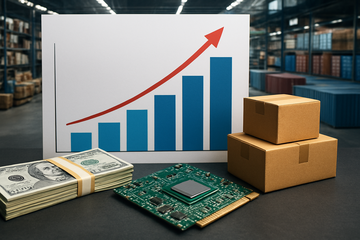
Elice, the largest Korean AI data-center listing of 2026, fell as much as 33% on its KOSDAQ debut despite 408x retail oversubscription and a clean H1 P&L — the worst first-day drop in any Korea IPO above US$100M on record. The market isn't doubting AI; it's repricing the multi-trillion-dollar neocloud buildout that Elice sits on top of, and that re-pricing now sits ahead of DayOne's Nasdaq filing, Nscale's $35B target, AirTrunk's delayed Singapore trust and Firmus's scrapped Australian offering. HBM and GPUs (SK Hynix, Samsung Electronics, NVIDIA) still get paid per watt; the leveraged neoclouds that funded the build (CoreWeave) and the debut hopefuls priced at peak multiples are what investors are pulling away from.
Mamdani's 'Abdication' Line Just Raised the Discount Rate on Every NY Data Center Project — and the Winners Aren't Who You'd Expect
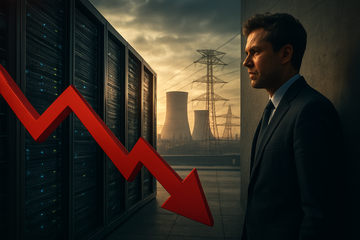
When Zohran Mamdani called federal AI oversight a \"complete abdication of federal law\" at the AI Now Institute's People's AI Assembly on October 19, 2026, he didn't just stake a campaign position — he converted New York's AI infrastructure risk from a regulatory gray zone into a voter-politics overhang that follows every Digital Realty and Equinix buildout into a higher cost of capital. With CoreWeave's $1.8B Kenilworth site already stripped of its $250M New Jersey tax credit and Governor Hochul's 50MW moratorium still in force, the investable takeaway is bifurcated: neoclouds and REITs with concentrated NY/NJ footprints take project-level hits, while diversified power-buildout beneficiaries — GE Vernova, Vistra, NRG Energy — capture demand redirected to friendlier geographies with even more aggressive capex curves.
2026-10-19

Cleveland-Cliffs' $575M Q3 EBITDA Doubles From Q2 — AI Data Centers Are Pulling US Steel, but 14x Net Leverage Is Why the Stock Still Sits at $12
Cleveland-Cliffs steps into the Q3 2026 print today with guided adjusted EBITDA of roughly $575M, more than double the $286M it actually booked in Q2, against hot-rolled coil at $1,356/ton (+67% YoY) and a 50% Section 232 tariff that's turned the US flat-rolled market into a near-domestic-only pool. The same setup exposes Cleveland-Cliffs's defining handicap: $7.70B of long-term debt and a TTM net-debt-to-EBITDA near 14x, against Nucor's 0.8x and Steel Dynamics's 1.2x. The AI-steel trade is real across the cycle, but Cleveland-Cliffs carries the most debt and the most captive upside from being the only major domestic GOES producer, while the September Stelco idling of Hamilton sits inside the Q3 numbers as the next big wildcard. Read-through: GE Vernova and Hubbell downstream, with Nucor and Steel Dynamics printing Oct 20 and Oct 26 as the cleaner-exposed comparables.
Kevin O'Leary is building the world's biggest data center. He just said 60-65% of them will never get built.
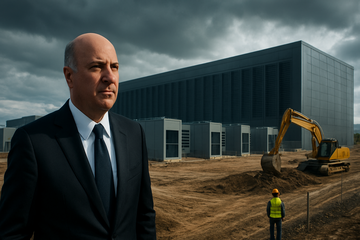
Kevin O'Leary — the Shark Tank 'Mr. Wonderful' who is racing to build a 40,000-acre Utah AI campus named after himself — went on MarketBeat on October 16 and said 60-65% of announced North American data center projects will never reach operations, killed by missing water, fiber, or power, or by political moratorium. Compute demand, in his telling, is roughly 3x available capacity. The warning lands in the middle of a $740B 2026 hyperscaler AI capex year, and splits the supply chain into clear winners (power, compute, real estate that has already broken ground) and clear losers (data center REITs exposed to speculative projects that will never energize).
2026-10-18

2026-10-17

Anthropic Now Sets the Funding Cost of Frontier Compute — And It's 10%
Anthropic is paying Blackstone above 10% on a $9 billion junior slice of a $60 billion Broadcom-arranged debt package that funds ~1.5 gigawatts of Google TPUs. The structure inverts who absorbs funding risk in AI infrastructure, swaps [Anthropic]'s $2 trillion S-1 from a revenue-curve debate into a funding-cost debate, and tells a hard story for NVIDIA, CoreWeave and every vendor that still underwrites AI lab compute on its own balance sheet.
$3.3B USDA Loan to a Georgia Co-op Just Wired Rural America Into the AI Power Grid
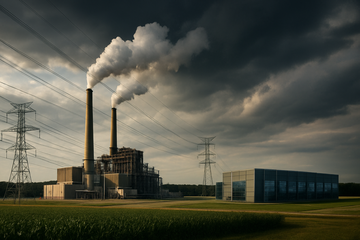
USDA's record $3.3 billion Rural Utilities Service loan to Oglethorpe Power — a nonprofit serving 38 Georgia electric co-ops — is the first federal rural-utility financing formally tied to data-center load growth. With Google's 948-acre Monroe County site adjacent to the new 1,425 MW Smarr plant and GE Vernova sitting on a $176B backlog, the deal pulls the rural co-op stack off the agricultural sidelines and into the AI buildout — and puts Vistra, Constellation Energy, and Quanta Services on collision course with Southern Company for the next dollar of load growth.
2026-10-16

2026-10-15

2026-10-13

2026-10-12

Amazon's $7B Decart bid moves the AI inference moat from a private-lab capex line to a public hyperscaler — Anthropic's $2T IPO just lost its efficiency story
Amazon is in talks to acquire Decart for around $7B, per the WSJ, after Anthropic walked away from a $6B offer in September following due diligence. The price — a 75% markup on Decart's $4B private mark in May — reprices the inference-efficiency software layer at a moment when AWS is the only hyperscaler to own both the silicon (Trainium3) and the optimizer. For Amazon, $7B is rounding error against a $2.8T market cap and a Q2 2026 quarter that produced $42.2B in AWS revenue. For Anthropic, the asset that would have anchored its pre-IPO compute-cost narrative now ships to the buyer whose chips Anthropic has already committed 5GW and 1 million Trainium2 units to — a costly structural inversion ahead of an October listing that wants a $2T valuation on $4.6B of 2025 revenue.

Amphenol's Oct 28 Print Is the First Live Read on AI Rack-IO Pricing Power
Sixteen days from now, Amphenol reports Q3 2026 with a setup no other interconnect name has matched: a 43% IT-datacom mix, a freshly-closed CommScope CCS acquisition layering $4B of run-rate sales, and a 2-for-1 stock split executed September 3. The Q3 print is the first public test of whether NVIDIA Blackwell NVL72 deployments are still pulling the 224G connector market tight enough to fund mid-30s operating margins — and whether TE Connectivity is the only real listed hedge for investors worried about a 7.9x EV/sales multiple on a $215B market cap.

Inside-Out Monitors Cut Rogue-Agent Policing From $200,000 to $51 — Goodfire Just Repriced the Stack That CrowdStrike, Palo Alto and Akamai Are Counting On
On October 8, 2026, Goodfire pushed activation-probe monitors live on Baseten that watch a model's internal signals and only escalate to a frontier LLM judge when something looks wrong — taking monitoring cost from roughly $200,000 per million exchanges to about $185. The shift reframes the defensive moat CrowdStrike Charlotte AI, Palo Alto Networks Prisma AIRS, Akamai AgentGuard, and Cloudflare Workers were pricing against, and reroutes the AI-safety budget toward inference platforms and silicon-level runtimes like NVIDIA's Open Agent Safety Platform.

Lumentum Is Sold Out Through 2029. That Makes 1.6T Optical, Not Silicon, the AI Bottleneck
Lumentum CEO Michael Hurlston said the company is sold out of optical components through early 2029 and cannot meet ~70% of demand for some products next year — a hard ceiling on AI buildout that sits at the laser-fab layer, not the GPU layer. With hyperscalers planning $725B of 2026 capex and Citi forecasting an $11B optical switching market by 2030,1.6T optical has displaced silicon as the binding infrastructure constraint — and the second-order trade runs through Coherent, Zhongji Innolight, and the hyperscaler build-out side as they scramble for laser capacity.
2026-10-11
2026-10-09
2026-10-08

APLD Printed 322% Revenue on a $6.4B Debt Stack — The AI Bond Wave Now Has a Live Tape
Applied Digital reported fiscal Q1 2027 revenue of $341.9M (up 322% YoY) on August-31 debt of $6.4B, with interest expense up 866% to $77.4M — the first live earnings print of a neocloud priced into 7% senior secured paper. CoreWeave, Nebius, and IREN show the cost-of-debt spread inside the AI hyperscaler/credit stack: 8.3%, 2.3%, and 1.7%. With $4T of AI debt issuance projected over five years and high-yield data center spreads blowing220 bps wider than the broad index at their peak, APLD is the canary trade — credit is the constraint, not compute.

Nous Research's $1.5B Puts the First Public Price on an AI Agent Layer That Hyperscalers Are Quietly Co-Owning
On Oct 7, 2026, open-source agent builder Nous Research closed a $90M Series B at a $1.5B valuation led by Robot Ventures, with NVIDIA, Microsoft M12 and Samsung Electronics on the cap table. At roughly 42x its $36M annualized revenue — versus 53–82x for Cognition, Sierra and Harvey — Hermes Agent is the cheapest seat at the 2026 AI agent category, and the only one financed by the same trio whose enterprise platforms it competes with. The deal forces enterprise buyers to choose between closed-stack agents (Salesforce Agentforce, Microsoft Copilot Studio, ServiceNow AI Agents) and a model-agnostic, self-improving harness running on their own infrastructure.
2026-10-07
What to expect
Evidence-first notes with a visible point of view.
This section collects sharp takes on earnings, shareholder meetings, and market structure. Each new piece should make the thesis, the facts, and the implications obvious within the first few screens.
Expect direct analysis, not generic commentary.
Expect the data to be explicit and the argument to be easy to follow.