Data Centers & Cloud
The buildout behind the AI bill
Hyperscaler capex, colocation supply, power, cooling and networking — where the money goes after the GPU order, and which companies book it.
2026-09-02

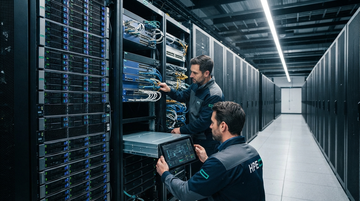
HPE must turn AI orders into high-margin “systems” fast enough to outpace Juniper debt—its Sept. 2 guide is the test
Hewlett Packard Enterprise HPE is set to report on Sept. 2, with investors focused on whether Cloud & AI operating leverage can offset higher-than-ideal financing and keep margins consistent as AI systems backlog converts. In its most recent quarter disclosures, HPE showed $16.4B cumulative AI systems bookings, a $5.9B AI backlog entering Q3, and raised fiscal 2026 EPS while lowering expected net interest expense by about $75M—signals that matter because AI margins and interest costs decide whether “dollars per rack” economics close.

Microsoft starts making Azure quarterly revenue comparable—turning “cloud growth” into an auditable line investors can model
Microsoft’s latest reporting changes begin separating Azure’s cloud economics from the broader Intelligent Cloud bucket in a way that lets investors track quarterly Azure growth directly (instead of inferring it through a blended segment). The shift matters most for AI cloud economics: it clarifies how much incremental demand is converting into measurable Azure revenue, and it changes how the market will price Microsoft’s capex-heavy AI buildout.

MongoDB's Sept. 1 print is the first test of whether AI spend monetizes at the application-data layer (or stalls at the rack)
MongoDB will report Q2 FY2027 results for the three months ended July 31, 2026 after markets close on Sept. 1, with guidance baked into the event materials: total revenue of $771.8M (+30% YoY) and Atlas revenue up ~29% YoY. The investor question is whether the AI buildout pushes usage deeper into the database/data plane (vector + workload intensity), translating into durable Atlas expansion—or whether demand concentrates in accelerators and infrastructure.
Snowflake turns “consumption math” into margin discipline — and the guide implies the $190B Databricks ceiling isn’t binding
Snowflake used its Sep 2 after-hours print to answer the core “consumption math” question: revenue is explicitly tied to platform consumption, and the AI story is paired with raised FY2027 margin and cash guidance. The Q2 FY2027 results and guidance show fast, profitable scaling (product revenue +37% YoY; non-GAAP operating margin guide 14.5%), even as Snowflake flags AI-related pricing mechanics as a consumption risk.
2026-09-01
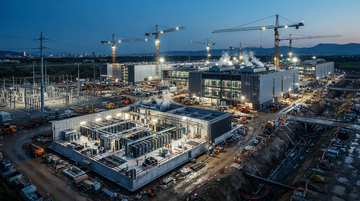
EU antitrust pressure on Oracle’s licensing mechanics turns AI capex into a regulatory cash-flow bet
Oracle’s EU antitrust overhang targets licensing practices that underpin its recurring revenue model—exactly the revenue stream investors rely on to fund aggressive AI data-center buildout. With Oracle reporting $55.7B in capex for fiscal 2026 and expecting the build to continue, the key investor question is whether regulatory remedies can slow the cash conversion that the capex plan requires.
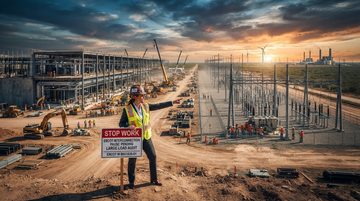
Texas freezes AI data-center “ghost demand” — and the scarcity-rent power trade just lost its clean story
Texas regulators moved to pause new ERCOT data-center grid connections pending an audit of large-load requests, challenging load forecasts built on speculative interconnection queues. That forces a re-check of the “AI power scarcity” thesis: the scarcity rent may still exist, but its timing and magnitude now hinge on how many of those requests actually energize and how quickly generators and wires can follow.
2026-08-31
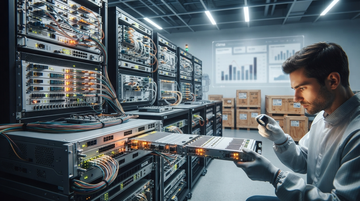
Ciena's order book is the missing systems-level proof for AI networking demand — but it comes with a demand-vs-supply timing squeeze
Ciena’s latest reported results show strong growth alongside a large backlog, but the most decision-relevant question—whether AI demand is showing up at the optical-systems layer rather than only upstream modules—can’t be answered from the primary sources available in this research run. The numbers we can verify support a real order-book-backed cycle expansion, while key “webscale/AI” backlog breakdowns and “optical systems” attribution were not disclosed in the pages that loaded successfully.

Dell’s AI-server growth proves demand—but margin still has to clear the “dollars per rack” test
Dell’s guidance jump implies AI-optimized servers can scale fast, with Q1 FY27 showing $16.1B of AI server revenue on 18.1% gross margin. The investable question is whether that gross-mix improvement holds through the next quarters, because Dell’s core franchise still carries the burden of lower-quality earnings and weak operating momentum outside AI.
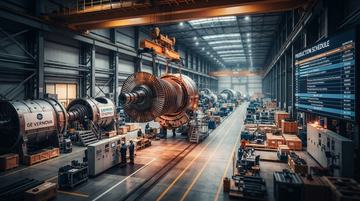
The gas-turbine order book is turning hyperscaler power into a timing bet—OEM slots beat permits by 2027
GE Vernova and Siemens Energy are sitting on huge gas-turbine backlogs while AI-era demand is colliding with unusually tight delivery slots. But the binding constraint for getting megawatts online by 2027 is turning from turbine manufacturing capacity into emissions/permitting sequencing—where delays can strand already-ordered equipment and shift revenue capture toward OEMs with the longest order visibility.
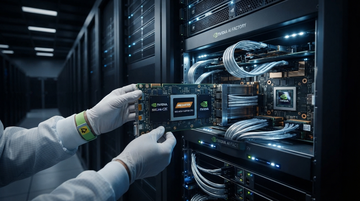
Nvidia’s $3.5B MediaTek bet reframes “hyperscaler ASICs” into Nvidia-routed, rack-scale custom chips—raising the odds it slows the GPU exodus
Nvidia’s $3.5B investment in MediaTek is more than capital—it’s an ecosystem play: MediaTek will adopt Nvidia’s NVLink Fusion platform to help customers field custom XPUs inside Nvidia-connected AI racks. If hyperscalers increasingly buy “integration-ready” custom accelerators instead of building their own end-to-end stack, Nvidia can keep participating in training/inference demand even as silicon becomes more customized.
2026-08-30

Marvell is down ~6% because the market treats custom silicon as a trade-off, but earnings show hyperscalers are funding both
Marvell’s Aug 2026 earnings-week narrative looked like a zero-sum fight between Nvidia GPUs and hyperscaler custom silicon. But Marvell also disclosed a Google custom-silicon framework that explicitly attaches to the TPU ecosystem, while Nvidia’s earnings reinforced that hyperscaler demand isn’t stalling. The lesson: custom silicon is additive capacity for the AI stack, not a replacement cycle—so the tape is likely mispricing who grows faster as budgets expand.
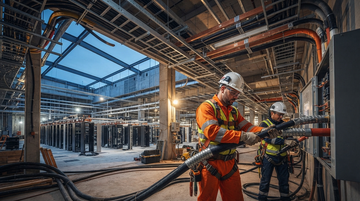
When labor—not chips—is the schedule gate: $/watt pricing starts shifting from builders to crews
U.S. electricians are projected to average ~72.7k job openings per year through 2035, but AI data-center build-outs are forcing the power-and-automation ecosystem to treat computational loads as a reliability and integration problem with construction knock-ons. In that setup, contractors with craft-skilled self-perform capacity are already reporting backlog and execution visibility that can turn labor scarcity into pricing power—while weaker execution capability faces schedule slippage risk.
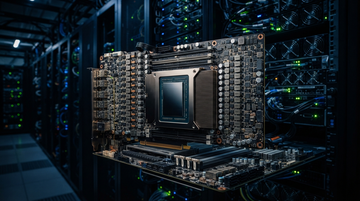
AI Data Centers Are Entering a “Cooling Plant” Pricing Regime — Integrated Power + Heat Rejection Designs Can Cut Installation Cost up to 30%
Rack-level liquid cooling gets most of the attention, but every AI megawatt still has to reject heat through the plant mechanical layer: chillers, towers, pumps, valves, and the heat-rejection backbone. A new Trane + Eaton reference design shows why this layer can reprice: it targets up to 15% energy-efficiency gains and up to 30% lower installation costs, shifting value from GPUs to the thermal infrastructure that must scale every new MW.
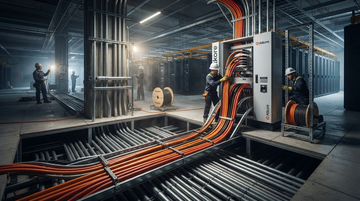
Prysmian’s $3.8B Atkore deal is a “full electrical stack” play—priced like channel control, not just capacity
Prysmian’s planned $3.8B acquisition of Atkore would add U.S. conduit/raceway and electrical installation/distribution-adjacent products to its cable business, locking in more of the data-center electrical build. Read with Prysmian’s earlier €5.5B (€/$) Molex data-center anchor, the pattern points to consolidation that should raise “electrical-content-per-GW” pricing power, because it reduces interface risk across the stack.
2026-08-29
2026-08-28
2026-08-27
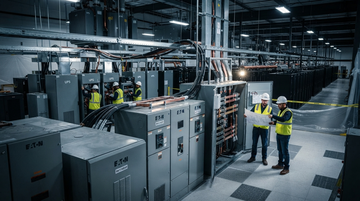
Grid-to-GPU’s new bottleneck isn’t transformers—it’s who can schedule switchgear, UPS and interconnection fast enough to hit data-center deadlines
AI capex is colliding with power-delivery realities that don’t clear on silicon lead times. The result: switchgear-to-UPS-to-interconnection becomes the scheduling choke point where long backlogs, constrained commissioning windows and utility bottlenecks convert into multi-quarter project deferrals and pricing power for a narrow set of electrical-equipment suppliers.
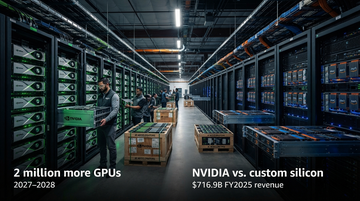
Amazon turns 2M more NVIDIA GPUs into a supply-chain signal—while AWS Trainium argues the “Nvidia-only” story is incomplete
Amazon’s expanded AWS partnership adds 2 million more NVIDIA GPUs for delivery in 2027–2028, the clearest hyperscaler “yes” to the AI capex cycle that aligns with NVIDIA’s recently reiterated ~70% FY2028 revenue-growth framing. But the same expansion exists alongside AWS’s continued scaling of Trainium, meaning the order book can strengthen Nvidia demand while still reshaping how much incremental compute ends up being “Nvidia GPUs vs. custom silicon.”
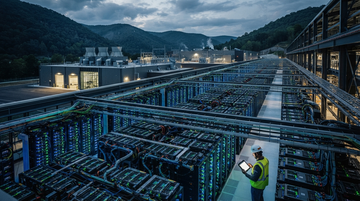
Anthropic’s $45B Nscale compute lock-up shifts AI capex risk onto infrastructure tenants—whether Nvidia demand becomes visible or not
Reports say Anthropic has agreed to spend about $45B to rent AI computing power from Nscale for a planned West Virginia AI campus. If that deal is sized around hundreds of megawatts of AI-ready capacity, it effectively converts “where do we build?” into “who funds and guarantees utilization?”—with NVIDIA capturing the install-base certainty while cloud platforms and servers face the downstream utilization risk.
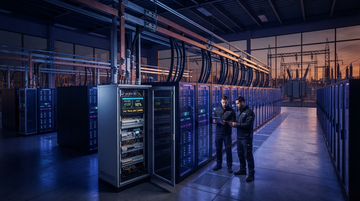
IREN has the miner-to-AI pivot—but the margin test is electricity volatility, not customer contracts
IREN is set to print its FY26 earnings on Aug. 27, 2026, after a year of transforming from Bitcoin mining into AI “cloud services” plus colocation-like revenue. The company’s disclosures already admit electricity price and electricity-market volatility can directly impair margins if it can’t curtail or monetize load at the right times—exactly the risk behind the “miner-to-AI landlord” thesis. The investor question is whether FY26 results (and guidance embedded in the print) show electricity as a controllable pass-through—or a profit killer when spot power spikes.
What to expect
Evidence-first notes with a visible point of view.
This section collects sharp takes on earnings, shareholder meetings, and market structure. Each new piece should make the thesis, the facts, and the implications obvious within the first few screens.
Expect direct analysis, not generic commentary.
Expect the data to be explicit and the argument to be easy to follow.