Latest
The day's market news, with the argument attached
New notes every trading day on earnings, policy and market structure. Each one opens with the conclusion, then the evidence, then the companies it hits.
2026-10-03

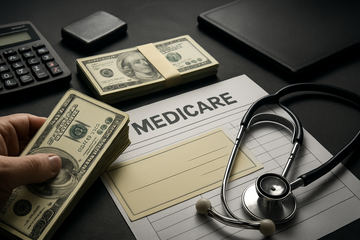
$90 Hits Only Half of Medicare: Why the Slush Fund, Not the Trust Fund, Is the Real Story
President Trump's one-time $90 rebate to roughly 20.8 million Original Medicare Part B enrollees — paid from a dormant $2 billion Medicare Improvement Fund on Oct. 8 — is a $1.87 billion cash transfer, not the recurring $22 billion shock the early headlines implied. By excluding Medicare Advantage members, dual-eligibles, and IRMAA payers, the carve-out sharpens the competitive pressure on UnitedHealth Group, Humana, and CVS Health heading into the annual enrollment period, while signaling a precedent for tapping never-used mandatory accounts that matters more than the check itself.

Up to 25M Trump Accounts Could Be Funded by Mid-October — That Locks $25B+ Into U.S. Equities for 17 Years
IRS CEO Frank Bisignano confirmed up to 25 million Trump Accounts could be funded within weeks, on top of Treasury's automatic enrollment of 60 million-plus children on Oct. 1. Every dollar flows into one of five ETFs — SPDR Portfolio S&P 500 ETF by default — and none of it can touch bonds, foreign, sector, or small-cap-only funds until the child turns 18. State Street and BlackRock are the two listed asset managers sitting at the choke point of a guaranteed, locked-in equity demand stream the bond-and-treasury headlines miss.
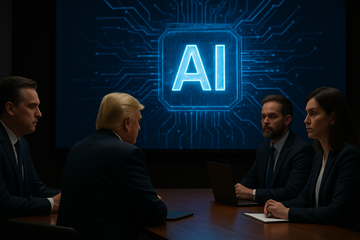
Apple’s absence from Trump’s AI summit didn’t just rewrite the guest list—it exposed a monetization gap in Siri’s “agent layer”
Trump’s Sept. 29 “White House Accord on Super Intelligence” gathering put nearly every frontier AI platform player in the room, yet Apple stayed off the platform map—even as Microsoft, Meta, Google, Nvidia and others used the moment to reinforce an AI build-and-deploy agenda. The investment implication is structural: Apple’s Siri-centered AI strategy is harder to plug into Washington-style “frontier” voluntary safety frameworks, leaving partnerships (and bargaining power) more open for non-Apple OS ecosystems.
$350B Korea Deal Splinters: Trump's $8.4B Alaska Oil-Recovery Claim Is Now the Loudest Number Nobody at the Table Has Confirmed
On Oct 2, 2026, Trump tacked an $8.4 billion Alaska enhanced-oil-recovery project onto the US-Korea trade framework via Truth Social — three days after a $54 billion Alaska LNG headline that Seoul also publicly disowned. Korea's industry ministry says both numbers 'go far beyond what was agreed' in the Nov 13, 2025 joint fact sheet, leaving investors to separate the confirmed $350B backbone (nuclear, Texas power, shipbuilding, Boeing) from the aspirational add-ons that the Alaska LNG economics can't yet underwrite.
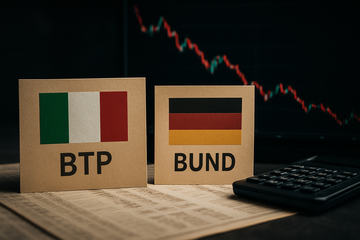
UBS just turned bearish on Italian BTPs vs Bunds — and the trade sits next to its 8,100 S&P call without contradicting it
On Oct 2, 2026, UBS's head of European rates strategy opened a fresh short in 10-year Italian government bonds against 10-year German Bunds, betting the BTP-Bund spread — already at ~127 bps — keeps widening as the global bond rout migrates from France to Italy. The same house still carries an 8,100 year-end target on the S&P 500 and a $3 billion buyback of its own stock. The two views are consistent: UBS expects long yields to stay higher, equity earnings to absorb the rate drag, and European sovereign dispersion to do the painful work instead.

Greer Says India Deal 'Not Imminent' — But an Oct. 18 Tariff Trigger Is Now in Play
USTR Greer's 'not imminent' walk-back after the Modi-Trump call leaves Indian-exposed stocks stuck between a stalled deal and a fresh statutory trigger — the Sanctioning Russia and Iran Act, signed Sept. 18, gives the President until mid-October to impose up to 100% tariffs on India. Pharma stays largely protected by Section 232 generic exemptions and a Sept. 28 specialty-drug waiver, but the February framework that cut duties to 18% lost its legal footing when the Supreme Court struck down IEEPA the same month. For Infosys, Wipro, Dr. Reddy's and the IT majors still priced for a deal, the right read is the stalemate — not the framework.
2026-10-02

Accenture's Q4 Beat Was the Easy Part. The Hard Part Is Why Managed Services Bookings Just Hit a Record.
Accenture closed fiscal 2026 with $18.7B in Q4 revenue (+7% local currency, above the top of guidance), $3.29 GAAP EPS (+46% YoY), and $22.2B in new bookings — and the stock jumped roughly 16% on Oct 1, 2026, after sliding about 31% year to date. But the more important story is in the bookings split: managed services bookings hit a record $12.77B against just $9.40B in consulting bookings, a divergence that signals a two-speed cycle in which AI-driven multi-year reinvention contracts are pulling ahead of traditional project work. With FY27 guidance of 3-6% local-currency growth bracketing consensus and Accenture exiting the discrete Gen-AI bookings disclosure after Q1 FY26, the read-through is that AI is now baseline, not a separate line item — and the consulting margin is being held up by managed services momentum.

Thieves Hit an Nvidia-Branded Trailer and Found 20 Tons of Sand. Freight Insurers Just Got Their Cheapest Warning Shot About $30 Million AI Heists.
Overnight on Sep. 23, 2026, thieves pulled two Nvidia-branded trailers out of a PlusAI yard in Fremont and walked away with 40,000 pounds of sand. The freight industry that just hit $304.6 million in cargo losses in a single quarter has not repriced for the new reality: AI hardware truckloads now regularly carry $5 million to $30 million of Nvidia-powered kit, declared-value caps at UPS and FedEx top out around $50,000-$100,000, and 92% of high-value tech thefts run on deception rather than force. Nvidia's Q2 FY2027 alone shipped $89 billion of data-center revenue — almost all of it rolling down the same highway corridors the sand trailer just proved are undefended. That is the transmission path: an earnings line at Travelers for cargo underwriters, a subscription tailwind at Verisk through its CargoNet unit, and a declared-value repricing question hanging over both UPS and FedEx — and the freshly spun FedEx Freight — within four quarters.
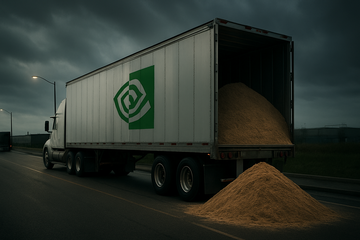
Thieves Stole a Branded Nvidia Trailer and Got 20 Tons of Sand. The Real $150M AI Theft Wave Will Hit the Distributor Sitting on 200 GPU Pallets Next.
On Sep 24, 2026, criminals hijacked an Nvidia-branded trailer from PlusAI's Fremont warehouse expecting a multimillion-dollar GPU haul — and walked away with 20,000 lbs of construction sand. The heist is the cleanest signal yet that organized cargo theft has industrialised around AI hardware: Verisk CargoNet says Q2 2026 US/Canada losses doubled to $304.6M even as incidents fell 26%, Overhaul has tracked $150M+ in AI-specific losses, and thieves now use bump-and-run attacks on armed escorts. The investors who misread this as a Nvidia or Super Micro problem will own the wrong stocks: the soft targets are the CDW-style IT distributors and integrators carrying high-value GPU inventory on rolling balance sheets that current freight insurance no longer covers.
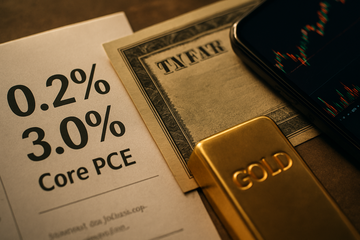
Core PCE Cooled to 0.2% — And the 10-Year at 5.34% Just Vetoed Warsh's Hold
August core PCE rose just 0.2% month-over-month and3.0% year-over-year, a tenth and three-tenths below consensus, handing Fed Chair Kevin Warsh the soft print he needed to pause at the next FOMC. But the 10-year Treasury hit 5.344% the same session — the highest level since April 2002 — and gold pushed past $4,200, exposing a market that is more hawkish than the Fed itself. The 0.2% confirms the August disinflation is real, but the bond market is calling the terminal point.

Bayer's First US Pharma Plant Sits Between a $5B Stroke Drug and a $7.25B Roundup Tab
Bayer is putting $2.2B into a 200-acre New Albany, Ohio campus — its first US pharmaceutical manufacturing site ever — anchored on Nubeqa, Kerendia and the soon-to-launch asundexian. The announcement comes three days after a 100% Section 232 tariff on imported patented drugs hit Bayer's books and ~20 days before a Missouri judge decides whether to sign off on a $7.25B Roundup class settlement, making this the cleanest test yet of whether a German pharma giant tied up in US litigation can still fund a decade of US growth.

Bessent's IRS Just Killed the 351 ETF Loophole — The $40B Offshore Flip and 4 Other Tricks Are Next on the List
Treasury Secretary Scott Bessent used the IRS to formally recharacterize the \"351 conversion\" — the bespoke ETF maneuver that lets the wealthy dump appreciated stock into a new fund without paying capital gains tax — as a taxable exchange. The Sept. 28 ruling, with comments due Oct. 28, lands hardest on BlackRock, Goldman Sachs, and the wealth platforms that built the trade, while leaving the $40B foreign-investor IVV/VOO dividend flip and a $7B crypto-ETF in-kind loop explicitly on the agenda.

Corteva's $42B 'wipeout' was a tax-free dividend in disguise — but the new pure-play just inherited its weakest pricing backdrop in a decade
Corteva's 83% October 1 stock plunge — more than $42 billion of market cap gone in a single session — wasn't a verdict on the ag-input cycle. It was a 1-for-1 tax-free pro rata distribution of Vylor to shareholders of record September 24, with the missing value transferring cleanly to the new VYLR ticker. What IS a verdict is the pricing environment the new pure-play crop protection company now enters: an FTC-ordered dismantling of Corteva's pesticide loyalty program, a collapsed Chinese generic glyphosate market, a pending anti-dumping petition, and a Latin America price decline already booked in 1H 2026.

Gemini 4 Argon Hits $2/$10 — Half Opus 5.5, a Fifth of GPT-6 Astra, and the AI Stack Just Re-priced
Alphabet shipped Gemini 4 Argon on Sept 30, 2026 at $2/$10 per million input/output tokens introductory — half Anthropic's Claude Opus 5.5 and a fifth of OpenAI's GPT-6 Astra — while winning or tying GPT-6 on 13 of 18 head-to-head benchmarks, including DeepSWE v1.1 at 77.9% and the Vals Index at 68.9%. The combination forces every AI-adjacent name to confront the same compression: every dollar of frontier inference revenue just got cheaper to capture. Alphabet can absorb it because Q2 2026 Google Cloud revenue ran at $24.8B (+82% YoY) against a $195–205B full-year capex stance and a $49.6B equity raise this summer, while Anthropic and OpenAI run on GPUs they rent from the same suppliers. Silicon owners — Broadcom as the TPU partner, TSMC as the foundry, NVIDIA for inference GPUs, and SK Hynix for HBM — are the names the price war actually rewards.

Google's 1,800-Launch Math Forces a Hard Reset on Nvidia's $21B SpaceX Bet
A new Google research paper pegs orbital AI data centers on roughly 1,800 Starship flights over a decade and launch prices near $200/kg by the mid-2030s — a cadence seven times the FAA's current Starship limit. Nvidia's $21 billion SpaceX stake, already down to $17 billion on mark-to-market, is now an option on whether SpaceX can hit 9,000-plus launches a year, and that re-prices the entire upstream chain from nuclear-component makers to deployable-radiator vendors.

Grok told Trump to capture Maduro. The liability doesn't stop at Musk — it's in every frontier lab's S-1
TIME reports President Trump spent hours consulting Grok in December 2025 before the January 3, 2026 capture of Nicolás Maduro in Operation Absolute Resolve; the model returned a political verdict (\"deeply unpopular dictator… Venezuelans would celebrate his downfall\"), not a refusal. That turns frontier-AI safety from a model-quality problem into an S-1, procurement and geopolitical liability. Anthropic's leaked IPO prospectus dedicates 80 of 261 pages to AI risk factors; the Pentagon just designated Anthropic a \"supply chain risk\" and rerouted work to OpenAI; SpaceX's May 2026 S-1 already names the Frontier AI Act as a risk factor and now owns SpaceXAI. Compute suppliers NVIDIA, Oracle and CoreWeave carry customer-concentration risk into the governance fight; Tesla is the most directly exposed listed name, with a $2B xAI investment and $430M of FY2025 revenue from the lab.

Tokyo's verbal yen defense just handed the carry trade a credibility haircut — and AI funding flows are the tell
PM Takaichi's October 1 promise that growth policy will restore yen confidence came two months after a record US-Japan intervention that pushed USD/JPY from 163 to 155 and back to 158 — and one day after a 30-year JGB high. With cross-border yen borrowing at a record ¥360 trillion and BOJ rate at just 1.25%, the carry trade math hasn't moved, so neither has the funding pipe that takes cheap yen into US AI data centers via Nippon Life's $12.75B pipeline and Japan's megabanks. The trade: Japanese megabanks benefit from BOJ normalization, but a verbal-only yen defense keeps the carry trade alive and US AI capex cheap to fund.

OpenAI's Three-Ring Safety Purge Hands Microsoft and Accenture a Selling Tool for the S-1's Riskiest Paragraph
OpenAI has parted ways with Jasmine Wang, Tomek Korbak, and Mikita Balesni, three of the loudest internal voices on its alignment team, after they allegedly shared sensitive information with an outside AI safety organization (Redwood Research and METR, per the WSJ reporter who broke the story). The exits turn OpenAI's draft S-1 'misalignment' risk factor from a theoretical disclosure into a named-personnel liability just as the company filed for IPO, and they line up with the Anthropic-Accenture 'embedded evaluator' pact — turning outsourced safety from a cost item into a sellable product for Microsoft Azure Foundry, Accenture, and Booz Allen Hamilton.
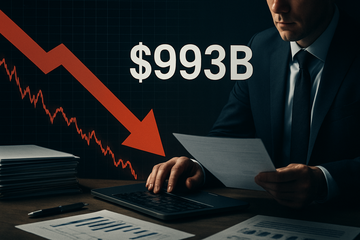
Q3 2026 Global M&A Cratered 41% as 10-Year Yields Hit a 24-Year High — and Wall Street's IB Engines Are Already Stalling
Global deal value collapsed to $993 billion in Q3 2026, the first sub-$1 trillion quarter since Q2 2025 and a 41% drop from Q2, as the 10-year U.S. Treasury broke above 5% for the first time since 2007 — peaking at 5.34% on Oct. 1 — the biggest quarterly jump this century. Megadeal count (>$10 billion) slumped to just 10, the lowest since Q4 2024. Bank of America has already guided Q3 investment-banking fees down 10–20%, while JPMorgan is the outlier with mid-to-high-teens growth. The Stripe–Advent International $53 billion bid for PayPal collapsed on price, leaving Aon/USI and Uber/Delivery Hero as the only Q3 deals large enough to matter — and both were strategic, cash-funded, not LBO-dependent.

Rivian beat Q3 with 19,248 deliveries—but the 42% software margin is now the only thing still carrying 14.5x EV/sales
Rivian delivered 19,248 vehicles in Q3 2026—beating FactSet's 18,000 estimate by 6.9% and posting +46% YoY growth—while reaffirming full-year guidance of 65,000–70,000 vehicles. The hardware beat is real, but to hit the floor of that range the company now needs 23,193 deliveries in Q4, a 20.5% sequential jump. The 14.5x EV/sales multiple the market is paying only makes sense if the Volkswagen joint venture keeps expanding Rivian's software and services line, which delivered $515M of revenue at a 42% gross margin in Q2 (with $308M, or 60%, coming from the VW JV). Hardware is now contributing record gross profit too, but vehicles are still cash-negative and the long-time CFO leaves for GE Vernova on October 30.
What to expect
Evidence-first notes with a visible point of view.
This section collects sharp takes on earnings, shareholder meetings, and market structure. Each new piece should make the thesis, the facts, and the implications obvious within the first few screens.
Expect direct analysis, not generic commentary.
Expect the data to be explicit and the argument to be easy to follow.