Industrials
Order books, backlogs and factory economics
Capex cycles, freight rates, automation and labour, followed through the machinery, transport and construction names that price them first.
2026-09-21


2026-09-19

GM caves on Apple CarPlay — buyer sovereignty just rewrote every OEM's dashboard thesis
General Motors on Sept. 15, 2026 folded Apple CarPlay back into its highest-volume vehicles, ending a three-year bet that buyers would accept an owned-software stack. The move protects Silverado and Sierra share but caps GM's bid for a $20-25B 2030 software TAM. Read-throughs: Apple reclaims the connected-car wedge ahead of CarPlay Ultra, Alphabet's Android Automotive still sits beneath the UI, Rivian becomes the lone no-CarPlay holdout, and Ford's hybrid Apple-Maps-by-MapKit playbook looks prescient.

US network airlines are treating Air China’s extra China flights like a slot/equity threat, not a route add
Major US carriers (via Airlines for America) have publicly opposed Air China’s request to schedule additional Beijing-to–New York and Washington flights, arguing the move would worsen competitive asymmetry created by US limits on Russian overflight. The episode reframes the bilateral fight as an access-and-market-share contest that can pressure pricing power and route economics for Delta, United, and American even if Boeing/Airbus capacity is unchanged.
2026-09-18

Manufacturing fell 0.3% in August, ending a seven-month streak. The Fed had hiked 25bps into it two days earlier.
The Federal Reserve's September 18 G.17 release showed U.S. manufacturing output down 0.3% in August — the first miss after seven consecutive monthly gains — and the categories that broke weren't AI. Motor vehicles (-1.2%), defense & space equipment (-1.2%), computers (-1.4%), and construction supplies (-0.7%) all fell, while semiconductors held +12.4% year-over-year. The print landed two days after Fed Chair Warsh's FOMC delivered the first rate hike since 2023, lifting the funds rate to 3.75–4.00%. The streak bulls called an AI buildout was actually reshoring, autos, and defense — and three pillars all rolled over in the same month.

How a $100M radar tariff exposes FAA ATC modernization's real $16B bill
FAA Administrator Bryan Bedford told lawmakers on Sept. 15, 2026 that phase one of the agency's air-traffic-control overhaul will cost $16 billion — about $3.5 billion more than Congress has appropriated — and that tariffs on imported radar systems alone will add roughly $100 million. The squeeze forces a working-capital rethink on a federal capex line that already stretches through 2028, and it gives L3Harris, RTX and Leidos a domestic-production edge over Thales and Indra Sistemas.
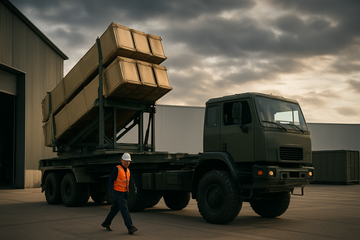
GM Built a Patriot Part in 22 Days — Auto Capacity Just Entered the Munitions Supply Chain for Good
GM Defense delivered its first PAC-3 MSE interceptor housings to Lockheed Martin on August 28 — twenty-two days after the contract was signed, instead of the several months a typical aerospace supplier needs. The shipment is the first concrete evidence that the Pentagon's industrial-base pivot is pulling civilian auto-OEM capacity into the $58.6 billion, seven-year Patriot framework, and it reframes General Motors's 2026 guidance of roughly $700 million in defense revenue and positive EBIT as the floor of a much longer-cycle structural margin story — not an EV-cycle hedge.

Manufacturing's Seven-Month Streak Just Snapped — and the AI Buildout Wasn't Big Enough to Hide It
U.S. factory output fell 0.3% in August, ending seven straight monthly gains and missing Reuters-polled expectations of +0.3%, with the Federal Reserve's G.17 release showing the weakness concentrated in motor vehicles, defense and space equipment, business equipment, and construction. The AI-linked information-processing line — up1.2% — only partly offset the broad cyclical roll-over, leaving the print a hard split between AI-supported and traditional manufacturing. With the Fed having just hiked 25bp on Sept. 16 and the dot plot still pointing to another 25bp by year-end, the report forces a reckoning for the goldilocks thesis: investors must now price AI-buildout strength separately from cyclical industrials.
2026-09-17

Beretta's 25% in Sturm Ruger Isn't a Takeover — It's a Foreign Bid for the Last Independent US Firearms Shelf, Rewritten by the FTC
Luxembourg-based Beretta Holding ends an 11-month campaign with a cooperation agreement that lets it buy up to 25% of Sturm Ruger, seat two directors, and explore US supply chains — but the FTC's September 16, 2026 consent order bars any Beretta executive from sitting on Sturm Ruger's board, capping the deal's reach and crystallizing a new antitrust template for foreign ownership of US firearms capacity.

J.B. Hunt Loses Its Bellwether Halo: A 13% Plunge on a Q3 Warning Says Diesel, Not Demand, Is Killing the Back Half
J.B. Hunt Transport Services warned at Morgan Stanley's Laguna Conference that Q3 EPS will fall 5–10% sequentially as record diesel and lagging fuel surcharges compress margins — even as intermodal volumes stay strong. The 13% selloff dragged Knight-Swift, XPO, Old Dominion and Saia lower, and reframes the freight thesis: the cost squeeze, not a demand collapse, is the 2026 problem. The clean counter-trade sits with the rails — Union Pacific, CSX, Norfolk Southern — whose fuel efficiency and contract structures absorb the surcharge lag.

Tesla Sold Forum Mobility a Megacharger Network — the $0.08/kWh Fee Is Where the Real Money Is
Forum Mobility is now installing Tesla's MCS Megachargers at its Port of Long Beach depot, putting a third-party fleet operator on Tesla's commercial charging stack and attaching a recurring per-kWh fee to every Forum truck on the road. The deal pairs with a 500-truck Einride order and a 370-unit WattEV buy to push Tesla Semi bookings past1,000 units since volume production began in April, and Tesla's own Q2 2026 10-Q now flags 'public Megacharger' deployment as a line item — proof that the trucking growth story has migrated from the truck itself to the megawatt-class hardware and software sold around it. For investors, the read-through is to Tesla Services & Other revenue (up 50% YoY to $4.58B) and to the second-order beneficiaries — battery cell suppliers and US-listed truck competitors — rather than to Tesla's auto margins.
2026-09-16

Korean Air's 103-aircraft Boeing bet is really an aftermarket-services call
The $36.2B list-price order reads like a delivery headline, but the durable investment signal sits inside GE Aerospace's services backlog and Boeing's delivery-conversion risk on the 777X and 737 MAX 10 — two programs that anchor Korean Air's 2026–2039 fleet plan. With Korean Air absorbing Asiana on Dec. 17, 2026 and Boeing's commercial backlog at a record $597B, the trade is whether production throughput can outrun certification delays to monetize the services tail.
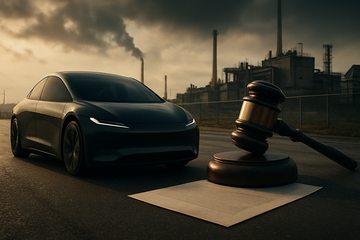
Tesla's Cybercab Self-Cert Bet Just Hit a 20-Day Clock — and a $139M Hammer
Six days after opening Audit Query AQ26002, NHTSA fired a 21-request Special Order at Tesla demanding under-oath answers on whether the no-wheel, no-pedal Cybercab actually complies with the FMVSS it claims to meet. With a September 30 deadline, up to $139 million in civil penalties, and federal FMVSS rules that explicitly assume a human foot on the brake, the self-cert path Tesla picked to dodge the 2,500-vehicle Part 555 cap is now the path most exposed.

Diesel Just Made Rail the Cheaper Lane: Quantifying the 2026 Truck-to-Rail Modal Trade
Union Pacific CFO Jennifer Hamann publicly confirmed the modal shift on Sept. 16, 2026, the same week EIA diesel hit a record $5.967/gal. With truckload cost-per-mile now north of $0.81, intermodal economics have flipped decisively toward rail — CSX and NSC posted 9% and 5% intermodal volume growth in Q2 2026 while JBHT's fuel bill jumped 53%. The first quantifiable margin trade of 2026 is rail over truck.
2026-09-15
2026-09-13

2026-09-11

2026-09-09
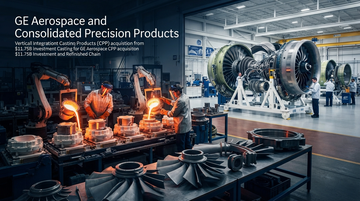
GE Aerospace turns a castings bottleneck into margin: the $11.75B CPP deal targets durable supply, not just faster deliveries
GE Aerospace agreed to buy Consolidated Precision Products (CPP) for $11.75B, explicitly to expand “mission-critical” castings capacity that constrains engine output. The market will focus on whether in-house castings convert temporary shortages into sustained pricing power and higher adjusted cash flow—especially if the $200M expected net synergies translate into steadier throughput through the 2027 closing window.
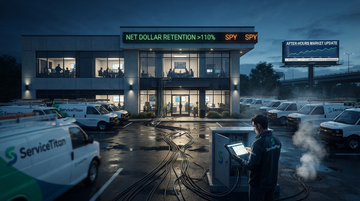
ServiceTitan’s “after-hours scheduling” story isn’t new revenue—yet—because its only hard KPI here is retention staying above 110%
ServiceTitan’s most concrete durability signal in the latest SEC filing is that net dollar retention remains >110% for the quarter ended July 31, 2026—evidence that existing customers are still paying more, not churning. However, the Sept. 8, 2026 after-hours move tied to a current report wasn’t matched with load-bearing, AI-scheduling-specific guidance language in the primary document excerpt available here, so “AI scheduling monetization” is still a working thesis rather than a confirmed financial driver.
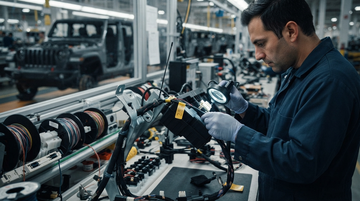
Jeep TPMS recall shows how one “minor” wiring/monitoring flaw can re-rank auto OEM cost-of-quality risk
A NHTSA recall covering 78,989 model-year 2024–2025 Jeep Wranglers ties the problem to a remote-start antenna cable that can prevent the TPMS warning light from illuminating as intended—an explicit Federal Motor Vehicle Safety Standard (FMVSS) compliance failure. For investors, the signal isn’t the fleet size; it’s the mechanism: a monitoring function built from distributed sensors + connectivity + validation can turn into recurring warranty/quality cost if similar integration escape-rates exist across variants and ADAS-rich trims.

US blocks Canadian motorcycles (over 800cc), plus key dairy and most alcohol—making trade “permissioned” substitution the real battleground
The White House issued import exclusions aimed at specific Canadian product HTS codes, with effect for goods imported on or after September 29, 2026—rather than applying a single broad price-only tariff. For investors, the market effect is likely to be less about macro price levels and more about who can quickly source “like goods” outside Canada, re-paper distribution contracts, and manage short-cycle inventory and compliance risk.
What to expect
Evidence-first notes with a visible point of view.
This section collects sharp takes on earnings, shareholder meetings, and market structure. Each new piece should make the thesis, the facts, and the implications obvious within the first few screens.
Expect direct analysis, not generic commentary.
Expect the data to be explicit and the argument to be easy to follow.